
 JILIVIP
 Bingo
Bingo Casino
 Fishing
 Sabong
 Slot Games
 Sports
 Promotion
 Lottery
 News
News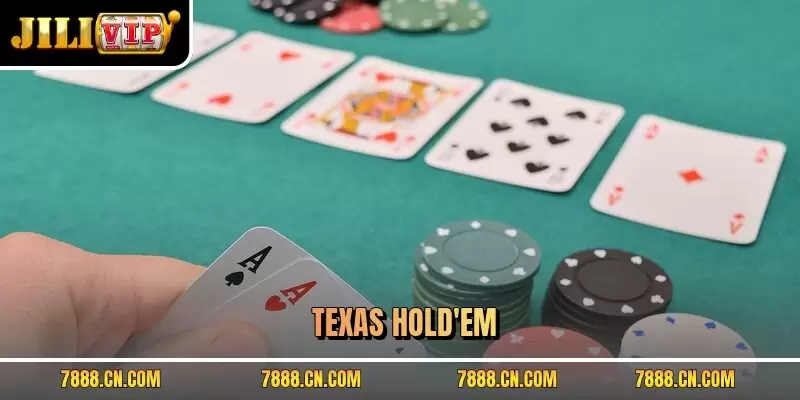
Welcome to JILIVIP Online Casino
Texas Hold’em at JILIVIP blends sharp calculation with real time strategy. Every hand is a chance to bluff, call, or raise with intent, demanding more than just luck. Players must read opponents, manage odds, and turn small stacks into powerful comebacks through smart, timely plays.
Discover how Texas Hold’em unlocks the master prize

Discover how Texas Hold’em unlocks the master prize
Texas Hold’em challenges players to manage risk, read opponents, and extract maximum value from each hand using two hole cards and five shared community cards. The format rewards timing, strategic aggression, and the ability to bluff or fold with confidence, making every round a mix of skill and psychology.
At JILIVIP, the Texas Hold’em interface is built for smooth play and real time decision-making. Players can easily follow hand history, stack sizes, and betting patterns. Whether you’re multi-tabling or just learning pot odds, the platform supports all levels with clean visuals and fast response, turning each hand into a strategic opportunity.
Rules and flow of Texas Hold’em you must understand
Rules and flow of texas hold’em you must understand
To master Texas Hold’em, players must be comfortable with every phase of the game. The structure is designed around four key betting rounds: pre-flop, flop, turn, and river. Each round allows strategic action that can define the outcome of the hand.
Hole cards and initial betting
Each player receives two private cards. These are your foundation. Once cards are dealt, the first betting round begins. Starting positions rotate around the dealer, with the small blind and big blind placing mandatory bets to build the pot. Players then choose to call, raise, or fold depending on the strength of their hand or their desire to represent strength.
The flop
Once the first round is completed, three community cards are dealt face up. This is called the flop. The second round of betting begins, with players evaluating how the flop interacts with their hole cards.
At this stage, many players either build the pot or strategically retreat. For example, holding a pair pre-flop and hitting a set on the flop increases your equity significantly.
The turn and river
A fourth card, known as the turn, is dealt after another betting round. This card can either complete draws or add danger by connecting with opponent ranges. The final card, called the river, completes the board and triggers the last betting round. At this point, players must decide whether to value bet, bluff, or call based on board texture and prior action.
Showdown and hand comparison
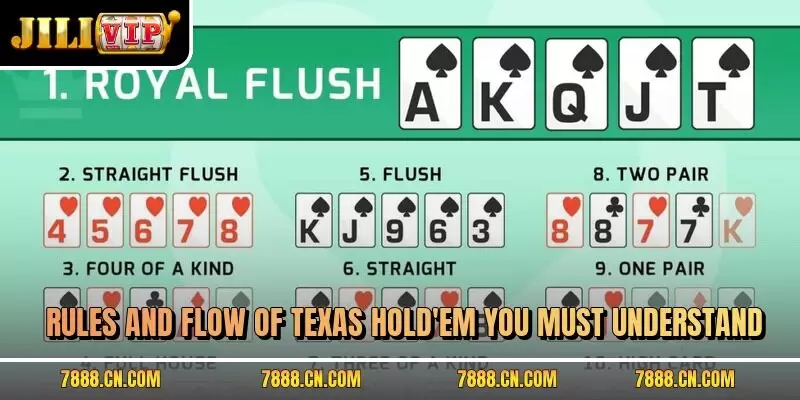
If more than one player remains after the river, cards are revealed at showdown. The best five card combination using any mix of hole cards and board cards wins the pot. Knowing when to reach showdown and when to extract fold equity is essential.
| Stage | Action |
| Pre-flop | Players act based on hole cards, blinds create pot pressure |
| Flop | Three board cards dealt, players start range evaluation |
| Turn | One card added, bet sizing reflects strength or bluff attempts |
| River | Final board card, value or bluff decisions peak |
| Showdown | Hands revealed, best five card combo claims the pot |
In ₱10/₱20 cash games, pre-flop raises often fall in the ₱60 to ₱80 range. Strategic continuation bets after the flop can maintain pressure when in position. Understanding stack to pot ratio and opponent tendencies helps guide action across each street, whether you are grinding small pots or chasing double up scenarios.
Smart tips to win more consistently in Texas Hold’em

Smart tips to win more consistently in texas hold’em
While every hand is different, long term success in Texas Hold’em comes from applying tactical concepts that work across game types. Below are five battle tested insights that can help sharpen your play and build confidence at the tables.
Play position aggressively for more control
Position in Texas Hold’em shapes your strategy by controlling how much information you get before acting. Late positions like the button let you see opponents act first, giving you flexibility to widen your range and apply pressure. Early position, on the other hand, requires tighter play with premium hands due to limited information.
At JILIVIP, one player raised KQ suited from the cutoff and used position to full effect. After a Q-high flop, they controlled the betting through a calculated c-bet, a turn check, and a river value bet maximizing profit thanks to their positional advantage.
Read betting patterns instead of just cards
Bluffs and value bets can appear identical, but their timing and size often reveal the difference.
A sudden river bet after a passive line might show a polarized range, while a check-call pattern may signal a draw. Reading the opponent’s actions is more telling than focusing on your own cards. A passive player’s unexpected raise usually indicates real strength, not creativity.
Stats show that on dry flops like A72 rainbow, continuation bets work over 65 percent of the time. However, multi-barrel bluffs lose effectiveness when the board texture changes drastically. The key to winning with weak hands lies in knowing when to apply pressure and when to let go.
Don’t chase every draw without the odds
Chasing inside straights or flushes without proper odds quickly drains your stack. If the pot is small and your chance of completing the draw is low, folding may be the better option. Conversely, when implied odds are high and stack depths deep, semi-bluffing draws can be profitable.
For example, in a ₱100 pot, facing a ₱30 bet with a flush draw gives you roughly 4 to 1 pot odds. If you expect to win ₱200 when hitting your draw, calling is correct. But if your opponent is short stacked, the potential payoff may not justify the risk. Texas Hold’em demands you combine probability with context.
Fold when signs point to strength
Folding top pairs or overpairs is difficult, but sometimes necessary. If a tight opponent raises the turn on a coordinated board, it often means a strong holding. Ignoring these signs and calling out of curiosity or stubbornness leads to stack erosion. Learn to let go of strong but vulnerable hands when action and board do not support continuation.
In a hand where an early position player three bets pre-flop and barrels all three streets on a four card straight board, folding top pair becomes the correct play more often than not. Protecting your stack preserves your ability to apply pressure later when the odds are in your favor.
Final thoughts
Mastering Texas Hold’em at JILIVIP means more than just playing your cards, it means outthinking the table, reading between the lines, and turning pressure into opportunity. The final table isn’t just a finish line, it’s your stage. Stay sharp, trust your instincts, and let every move reflect the champion mindset that brought you this far.
 Midas Touch Clever Tricks To Enjoy Golden Gameplay
  Lazy Rich – Master JILIVIP With These Simple Cheats
  King Of Fighting – Master The JILIVIP Combo Tricks
  Full Moon Lanterns – How To Find JILIVIP Lucky Hits
  Dragon Pearl Legendary Fortune Awaits Every Single Spin
  Searing Dragon Palace Adventure – Drain The JILIVIP Sea Vault