
 JILIVIP
 Bingo
Bingo Casino
 Fishing
 Sabong
 Slot Games
 Sports
 Promotion
 Lottery
 News
News
Jackass card game includes high-variance poker or draw variants where a specific card, often a Jack or Ace, changes the betting dynamics. Success on JILIVIP requires mastering the Jackass card, calculating probabilities, and applying disciplined wagering.
Deep dive into the exciting Jackass card game
Deep dive into the exciting Jackass card game
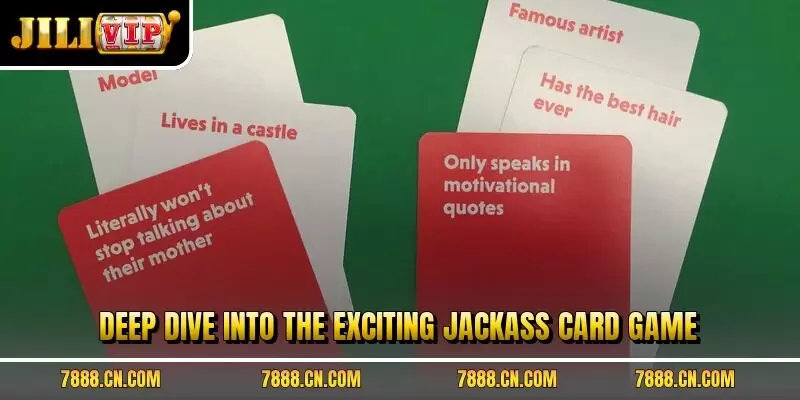
The Jackass card game’s appeal comes from the designated Jackass card, which adds high variance and randomness. This card triggers penalties like forced folds, extra bets, or reduced hand value, keeping players alert and adaptable.
Strategy revolves around the card’s impact on Expected Value (EV). Even strong hands can be nullified by holding the penalty card, so players must recalculate probabilities and study JILIVIP’s variant rules to manage the risk effectively.
Get started with the fundamental Jackass card game setup
Get started with the fundamental Jackass card game setup
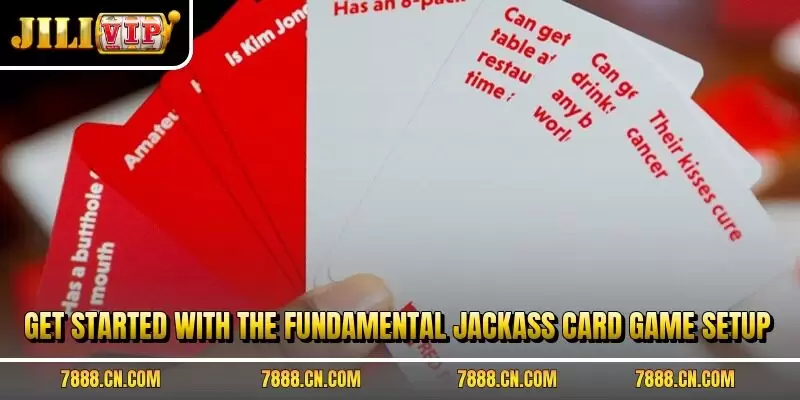
Successfully wagering on the Jackass card game requires a detailed understanding of the penalty card’s influence, how it redefines hand values, and how betting strategies must be adjusted to account for the unique variance.
The rule of the designated jackass card
The identity and consequence of the Jackass card are the central variables that define the game’s strategy.
- Identity: In some variants, it is a low card (e.g., the 2 of Clubs) that forces the holder to pay a penalty. In others, it is a high card (e.g., the Jack of Spades) that acts as a mandatory discard or a card that counts as zero value.
- Consequence: The consequence can range from an immediate bust (e.g., in a version of blackjack) to forfeiting the entire pot or being forced to match the largest bet on the table.
Hand valuation adjustment
The presence of the Jackass card forces a complete re-evaluation of standard hand values.
- Devaluation: If the Jackass card causes a mandatory discard, a player holding an otherwise high-ranking hand (e.g., Four of a Kind) must reduce the hand’s value to the next best five-card combination, significantly decreasing their win probability.
- Wild Card Inversion: In some exotic versions, the Jackass card acts as an adverse wild card, only allowed to complete losing combinations. This strategic inversion must be factored into every decision.
Knowing the exact ranking and the subtle differences in hand strength is vital for accurate decision-making in high-pressure situations.
Betting round dynamics
The betting structure in the Jackass card game is often designed to encourage aggressive betting early, tempting players before the penalty card is revealed or activated.
- Early Aggression: Bet aggressively on strong hands without the penalty card in the starting deal to force out marginal opponents.
- Late Caution: If the penalty card has not yet been revealed, or if you suspect an opponent may be holding it, exercise extreme caution when committing large amounts of capital, as the pot can be instantly reversed by the penalty mechanic.
The decision to hold marginal drawing hands is crucial and must be based on the revised probabilities after factoring in the penalty risk.
| Card Rank | Role/Identity | Consequence | Strategic Response |
| Jackass Card | Varies by variant (e.g., JS, 2C) | Mandatory penalty, discard, or bust. | Avoid drawing to hands that include this card; fold early if held. |
| Premium Hand | (No Jackass Card) | High Win Potential. | Bet aggressively to extract value before the penalty is activated. |
| Marginal Draw | (Risk of drawing Jackass) | High Risk, Uncertain Return. | Only pursue if Pot Odds heavily justify the penalty risk. |
These unique dynamics dictate the entirety of the strategic framework in every round of Jackass card game play.
Unlocking winning methods for the Jackass card game

Unlocking winning methods for the Jackass card game
Winning at the Jackass card game depends on grasping the role of the penalty card. Using strategic decisions and calculated plays can give you a clear advantage.
Rigorous risk assessment of the penalty card
The tactical imperative is to calculate the probability of the Jackass card being in play, either in your hand, in an opponent’s hand, or still in the deck. The strategic move is to determine your fold equity before betting.
If the penalty card is highly likely to be revealed on the next street, the value of even a strong hand decreases significantly. Never call a large bet if your hand loses outright to the penalty mechanic, regardless of its strength against standard hands.
Exploiting the known location of the jackass
If, through observational tells or the game’s mechanics, the location of the Jackass card becomes known (e.g., an opponent received it and flinched), the tactical advice is to capitalize ruthlessly.
If the opponent is known to hold the penalty card, bet aggressively, as their hand value is either significantly reduced or they face a mandatory penalty, increasing the likelihood of a fold or a forced disadvantageous bet. This information asymmetry is a massive source of EV in the card game.
Bluffing the penalty card effectively
Even if you don’t hold the penalty card, the perceived risk of the Jackass card can be used for effective bluffing. Betting aggressively can suggest that you’re forcing your opponent to fold to avoid the penalty.
This tactic is especially powerful when the penalty card is still in the deck and the opponent has a marginal hand. The fear of the penalty often outweighs the fear of a strong hand, making bluffs highly effective in the Jackass card game.
Strategic bankroll segmentation for high variance
Given the extreme, unpredictable variance introduced by the penalty card, disciplined bankroll segmentation is non-negotiable. The tactical advice is to set aside a specific, small portion of your capital solely for the card game.
Never cross-fund this high-risk variant with capital reserved for lower-variance games like standard poker or blackjack. This protective measure ensures that an unpredictable, large penalty bet does not lead to a catastrophic total bankroll loss.
Valuing position relative to the penalty
Position is always important in card games, but in the Jackass, it is crucial relative to when the penalty card is revealed or activated. If the penalty card is revealed on the River, the player acting last can use this information to determine whether the pot is worth betting into.
The strategic move is to play tighter from early position and looser from late position, allowing you to react to the high-variance outcome of the penalty card, thus minimizing risk and maximizing informational advantage.
Conclusion
The Jackass card game is a fascinating blend of skill and high-variance risk, demanding complete mastery of the penalty card’s influence at the JILIVIP tables. By rigorously assessing the penalty risk, exploiting the card’s location, and applying disciplined bankroll management, you gain a measurable advantage.
 Midas Touch Clever Tricks To Enjoy Golden Gameplay
  Lazy Rich – Master JILIVIP With These Simple Cheats
  King Of Fighting – Master The JILIVIP Combo Tricks
  Full Moon Lanterns – How To Find JILIVIP Lucky Hits
  Dragon Pearl Legendary Fortune Awaits Every Single Spin
  Searing Dragon Palace Adventure – Drain The JILIVIP Sea Vault